

wiaa

The Overlooked Issue of Iron Deficiency in Athletes – BY SOPHIA CHUN, CENTRAL KITSAP HS (’27)

Sophia C.


THE OVERLOOKED ISSUE OF IRON DEFICIENCY IN ATHLETES BY SOPHIA CHUN, CENTRAL KITSAP HS (’27)

sophia blog

After suffering from injuries that took away my sophomore cross country season, I knew that coming into junior year, I wanted to make the most out of every race. I pushed myself in workouts and strode to finish empty at every race. I showed a lot of growth during the beginning of my season, hitting consistent PR’s and getting better mentally every race. Yet once the post-season hit, I felt like I had nothing left in me after the first mile. I would get fatigued a lot more easily and would end every race by collapsing onto the ground due to dizziness. At NXR Northwest, my symptoms reached their worst as I started to feel so nauseous after my race, I couldn’t walk for more than 100 meters without taking a break. 

While post-season race courses are not easy in any aspect, I had a feeling that my symptoms were still something unusual. When I was at peak fitness on a completely flat course at NXR, I ended up running over a minute over my PR. Yet in workouts, I was hitting my splits and showed consistency in my training, creating more confusion about my health.

After blood tests and research, I learned I was suffering from iron deficiency. In comparison to Anemia, iron deficiency focuses on the lack of iron stored in your body rather than having a low red blood cell count. Iron is vital for physical and mental performance, especially in endurance athletes who consume large amounts of oxygen, which is transported by iron. When iron is depleted, the body is unable to provide sufficient amounts of oxygen throughout the body. The lack of oxygen can cause reduced athletic and mental performance, which is commonly overlooked as burnout or just fatigue. Furthermore, iron deficiency is commonly overlooked in women. According to an article by UCLA Health, symptoms can be overlooked due to vague or easily ignored symptoms. This is extremely problematic as more than ⅓ of reproductive women are not receiving proper iron levels. Additionally, nearly 35% of female athletes suffer from iron deficiency, 52% being adolescent teens. Female athletes are at high risk for iron deficiency not only due to blood loss with menstruation, but also due to food restrictions that are common when training for athletic competition. Dr. Caitlin Lewis of the Cleveland Clinic Sports Medical Center emphasized, “Iron deficiency in women athletes is not discussed enough,” and that “Even if they’re eating iron sources such as legumes and fortified foods, females often are not consuming enough iron, especially if avoiding red meat…” 

As an athlete who has experienced iron deficiency, it’s easy to second-guess your symptoms as something that will eventually go away. However, I strongly advocate that athletes should listen to their bodies and to seek medical care when something feels off. Nobody should have their symptoms dismissed when they are truly affecting their physical and mental well-being. I have always been passionate about health and providing for others, and I hope I can use my voice through WIAA to encourage other student athletes to seek care if they feel any symptoms, and continue bringing awareness to an issue commonly overlooked by many.
CABBAGE PATCH – BY OWEN YEE, FIFE HS (’27)

Owen Y.


CABBAGE PATCH – BY OWEN YEE, FIFE HS (’27)

Owen Yee, Cabbage Patch

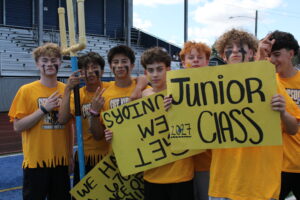
Fife High School was founded in 1916, making it one the older schools in Washington. This long history comes with many traditions that are still practiced today, such as “The Trojan Walk”, where incoming students get inducted into the school. Another tradition is a special day called Cabbage Patch.


Before the school was built, the land was filled with cabbage fields (hence the name), and now the land is used to host Cabbage patch. In the week leading up to Cabbage Patch, there is spirit week and exciting sport games. Then on Friday, all classes are cancelled, and the day starts with a volleyball tournament. Following that, we have lunch and then head out to the football field where we begin the actual Cabbage Patch, which is our own version of the Olympics. After lighting the Trojan Torch – a hollowed-out cabbage that we light on fire – there’s games like tug-of-war, car push, cabbage bobbing, cabbage throw, an obstacle course, and many others.


The atmosphere is alive with competition and excitement, providing endless opportunities to meet new classmates and strengthen bonds through spirited grade rivalries. Senior Logan Marquart says that, “Cabbage Patch is one of the biggest moments for a Fife High School student, the intense games and competitive atmosphere makes Cabbage Patch worth every moment.” Each win grants your grade points, and at the end of the day, the scores from the volleyball game, spirit week, olympics, and ASB purchases get added up. The winner is announced and the Trojan Shield is awarded.


Personally, Cabbage Patch has been one of the best memories of all my school years. With all the feelings that come with the end of Summer and the beginning of the school year, this event makes coming back to school a little easier and more fun. After not seeing many people for a few months, I get to connect with my peers and enjoy a day strictly meant for a good time. When asking my classmates what Cabbage Patch means to them, Junior Hunter Kruse says, “Sometimes in the beginning of the year people don’t want to come to school but with a fun and chaotic event like Cabbage Patch it creates an atmosphere where you feel you are connected to the school.”


With this day being in September, all the new students have the opportunity to meet friends, make memories, and begin to understand the true culture of Fife. At Fife, we have the saying, “Fife for Life,” evident by the Alumni Walk, where past graduates are invited back to walk and represent their decade during the Homecoming Football Game. During Christmas time, we put on “Winter Wishes,” where we give back to the community by providing gifts that children wish for.


But also, the community within the students is something very special. At Fife, we see the student body as a family, made apparent by Logan, who says, “Although all the grade levels are competing against each other, at the end of the day we still come together as Fife Trojans.”


Over the last 2 years of participating in Cabbage Patch, I’ve noticed that some students are too shy, insecure, or worrying about looking stupid, yet I strongly advise you to not be this way. I’m positive that these kids did not experience Cabbage Patch like the rest of us, and I don’t want anyone missing out on experiences that we only get a few times. At the end of the day, it comes down to what’s important to you: having fun with your friends or letting worries about how others might see you get in the way.


With this, I encourage you to step out of your comfort zone, learn to have a good time, and just be yourself. Enjoy the moment and create memories that will last a lifetime. Remember, we’re only highschoolers once, and we’re not here for a long time, we’re here for a good time.

Crisis Control at WIAA Events – By Bella Adaszewski, Cheney (’27)

Bella's Headshot


CRISIS CONTROL AT WIAA EVENTS – BY BELLA ADASZEWSKI, CHENEY HS (’27)

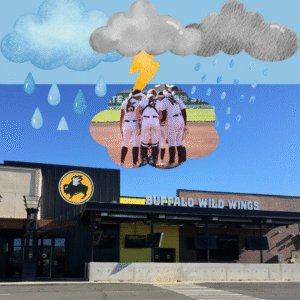
BWWs

Many of us athletes have experienced delays or even cancellations during our sporting events at least once in our careers, it’s almost like a rite of passage. These interruptions can happen for a bunch of reasons, but let’s be honest: it usually comes down to the weather, and those of us in Washington know how unpredictable our weather here can be! Just recently, on day two of the WIAA slowpitch softball state tournament, we were hit with a big downpour. The fields turned into mini lakes, making them completely unplayable, and unfortunately, this resulted in a much dreaded delay. When situations like this happen, emotions are at an all-time high. Athletes are eager to jump back in and play, and parents and fans are just as eager to cheer on and support them, and everyone has the same question: “When are we going to be able to play again?”. The WIAA staff understands these emotions, and most of them have played sports and know just how important the game can be to the athletes, but people often don’t understand what goes on behind the scenes during these stressful times, and I myself was one of them up until this event.

As a member of the WIAA LEAP committee, I get the privilege of helping out at WIAA state events, and although I am not a softball player, I decided that the state slowpitch tournament was an event I would love to help with! I have been to WIAA state events before, but never got to see the behind-the-scenes stuff, so it was definitely a unique experience when I received a call from my advisor, Bryn, the day of the event, telling me there was a rain delay and games might not even be happening at all. My first thought was how all the athletes must be feeling. Today could’ve been the biggest game of their season, and for some, maybe even the last, and for there to be a chance that these games could just not happen was disappointing, and I wasn’t even one of the athletes competing! Bryn told me to meet her, another WIAA staff member, Teagan, and LEAP member Ava for lunch, where we would figure out the game plan. So there we were, corner booth at Buffalo Wild Wings, computers out, emails open, just trying to figure out what we were going to do to make this experience the most successful with the circumstances we were dealing with. When I imagined crisis control for the WIAA, I couldn’t tell you much, but I know for sure my vision did not include Buffalo Wild Wings.

During this time, we all brainstormed ideas, while of course eating wings. Two of the teams that were supposed to compete that day for 3A, Mt Spokane and University, were both from Spokane Washington, where me and Ava are located, and we threw around the idea of moving their game back to Spokane sometime during the following day or week, to try and eliminate the idea of the teams having to purchase another night of hotels if games could not resume that same day. In the end, that was not needed but It would’ve been nice to have Ava and I close to help out! During our lunch debrief, one of the softball teams, as well as the tournament referees, also came into Buffalo Wild Wings to have some lunch, and it was great to see them making the best out of the situation they were in and still having a good time!

After lots of ideas were thrown around, and seeing the rain wasn’t supposed to stop anytime soon, we recognised that there wasn’t much we could do besides wait it out. So, in case the games really were cancelled for good that weekend, we decided to start some cleanup at the venue. This included taking down almost all of our “state” signage on the fences and sponsorship banners as well. After the cleanup was done, it was already late in the afternoon, so I had to start my drive back to Spokane, as well as Ava. During my drive, the rain cleared up and it was announced that both championship games would be played that evening at a different venue, immediately following each other, while all other remaining consolation teams would share third place. This was definitely disappointing for some, but at the end of the day the championship games happened and we got to award state champs!

Overall, this experience was great! I got to see what really happens on the logistical side of delays and cancellations, and now have a better perspective to take when and if I am ever in a delay and I’m the one competing. I also got to know my fellow LEAP member, Ava, way better after working together to navigate the challenges of the day that kept getting thrown at us. It was great to bond over the shared experience of problem-solving and supporting the athletes and coaches when neither of us had been in this position before. This experience has truly opened my eyes to the behind-the-scenes work in our WIAA events that often goes unnoticed, but is very vital. I’m really excited to carry this knowledge with me, especially when it comes to recognising all the hard work that goes into making these competitions happen, even when we face challenges. This experience has really strengthened my belief in the importance of teamwork, understanding, and adaptability, all skills that are just as important in life as they are in sports! I can’t wait to come back next time and share this fresh perspective!

What Now? Separating My Identity from Athletics – By Kara Ma, The Bush School (’25)

K. Ma


WHAT NOW? SEPARATING MYSELF FROM ATHLETICS – BY KARA MA, THE BUSH SCHOOL (’25)

karaWhen I first started playing sports, I never thought about the last time I would play a basketball game, race a 5K, or compete in a track meet. As someone who has identified as an athlete for as long as I can remember, grappling with the idea of my last high school sports games has been incredibly difficult. To be honest, I think I’m still in denial about never playing an organized basketball game again. Earlier this year, I made the difficult decision to prioritize academics over athletics in college, and the emotional weight of that decision still sits heavily on me. It’s forced me to ask questions I hadn’t considered before: Who am I without being an athlete? How do I separate my identity from the only label that’s ever really stuck? Without realizing it, sports had become the framework of how I view myself. So maybe the better question isn’t “Who am I without sports?” Maybe it’s simply “Who am I, really?”

As a senior in high school, I am currently in an era of many endings and new beginnings, which is equally exciting and terrifying. Now that I am just a few weeks away from the end of my time in high school athletics, I’m stepping into unfamiliar territory that is filled with uncertainty. As a result, I am trying to figure out more about who I am. I have started to notice the parts of me that have existed all along, but have been overshadowed by sports.

Looking back, I realize sports taught me more about myself than I ever gave them credit for. Yes, they built my physical strength and endurance, but more importantly, they shaped my character. I know how to work toward long-term goals and be content without instant results or gratification. I learned how to show up for others even when I was tired, frustrated, or doubting myself. I know how to fail publicly and still leave the building with my head held high. I know how to lead, listen, and stay disciplined. The resilience that got me through tough games and injuries also helps me push through personal and academic challenges. These aren’t just athletic skills; they are life skills, and I am eternally grateful that sports gave them to me. Additionally, they won’t vanish just because my time as a high school athlete is ending.

Being an athlete has shaped me, but it surely doesn’t define me. As I start a new chapter of my life, I have to remember that who I am is not defined by awards and accolades. Who I am has never been defined by how many points I scored or how fast I ran; it’s been about my values, my actions, and the way I interact with those around me. While sports taught me how to push my limits and strive for excellence, it’s the relationships I’ve built and the impact I’ve had on others that truly shape my identity. Those are the things that will endure long after I complete my final seasons as a high school athlete.

There’s still a part of me that misses putting on my basketball uniform, practicing with my teammates, and going to AAU tournaments. After playing basketball for over ten years, part of me now feels empty. But I know that sports will always have a presence in my life. I will always watch basketball, play pickup games, and go for a run to boost my mood. However, now I have something new: space. Space to reflect. Space to grow. Space to figure out who I am without competing, being watched, or feeling judged. I’m discovering new things about myself that I didn’t fully know before. I’m learning that I can enjoy something just because it brings me joy, not just for the purpose of making me a better, faster, or stronger athlete. I’m learning how to be comfortable with uncertainty and how to chase goals that don’t come with a cheering crowd. Ultimately, I’m learning that stepping away from something doesn’t mean losing it. I may no
longer be an athlete in the traditional sense, but I still carry the heart of one; I will always be an athlete, it just looks different now. And slowly but surely, that’s starting to feel like enough.

Whether you are experiencing a transition period in your life, the end of your athletic career, or maybe you are starting something new, I hope you know you are not defined by what activities you do or your performance. You’re not leaving your identity behind. You’re simply bringing it with you into a new part of your life, where it can grow even stronger. You are your own person, and that will always be enough.

More than an Athlete: What I Learned about Identity, Faith, and Failing Forward – By Justyce Zuniga, Toppenish HS (’26)

J. Zuniga


MORE THAN AN ATHLETE: WHAT I LEARNED ABOUT IDENTITY, FAITH, AND FAILING FORWARD- BY JUSTYCE ZUNIGA, TOPPENISH HS (’26)

champ wr

As a young athlete, so much of your identity gets wrapped up in your sport. Your wins define you. Your losses haunt you. And your mistakes? Let’s be honest, some adults will try to crucify you for them. Being an athlete is part of your story, but it’s not the whole thing.

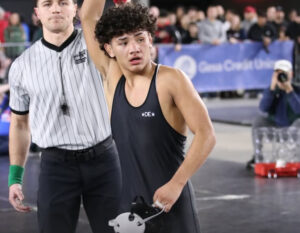
As teenagers, we encounter numerous challenges that can swiftly transform our lives. Whether it’s something small like cutting in the lunch line or a critical six minutes of a wrestling match, one moment, everything feels normal, and the next, your whole perspective shifts. It can change how you view your school, your principals, and even the once-trusted adults around you. Sometimes, all it takes is one action, one choice, for a heavyweight to settle in. And that weight can make you feel judged, misunderstood, and even ashamed. The hardest part is realizing I’m not perfect; I will never be. But I also know this: I serve a God who gives me grace every single day. He doesn’t excuse my mistakes, but He offers me the chance to grow from them again and again.

If I could sit down with my freshman self, there’s a lot I’d say, but I’d start with this: read Shaken by Tim Tebow. That book could’ve saved me many inner battles and helped me discover something far more important than wins, losses, and even my failures and identity. That’s why Shaken by Tim Tebow struck me. In his book, Tebow shares what it’s like to be at the top and still feel lost. To be praised one day and doubted the next. To be judged by strangers and people you thought were rooting for you. And yet, through it all, he holds on to one thing: his identity in Christ. Reading Shaken reminded me that my worth doesn’t come from titles, trophies, or who’s cheering. It comes from who I am when everything is stripped away. And who I am is someone who is still growing, learning, and has a purpose.

To anyone reading this, especially younger athletes, I want you to know:
● You will mess up. That’s okay. Learn from it; don’t let it define you.
● You will be misunderstood. Keep showing up anyway.
● People will judge you. But God still sees your heart.
● But you are still more than an athlete.

The truth is I’m not perfect, and I never will be. None of us are. You are a whole person, valuable even when you’re not winning, worthy of grace even when you fall short, and able to always get back up and grow stronger not just in your sport but also in your faith and mindset. So, take the pressure off perfection. Own your mistakes. Remember that your identity is not in what you do but in who you are.

The Native American Culture and Athletics of Chief Leschi – By Joey Earl, Chief Leschi HS (’25)

J. Earl


THE NATIVE AMERICAN CULTURE AND ATHLETICS OF CHIEF LESCHI- BY JOEY EARL, CHIEF LESCHI HS (’25)

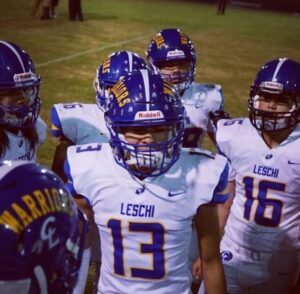
joey footballChief Leschi Schools is a K-12 institution consisting of elementary, middle, and high school levels. It is an all-Native American school that strongly embodies its culture and athletics. I played football, basketball, and ran track. As athletes of this school, we carry much more with us than just our gear or game faces; we carry years of tradition and the pride of our ancestors. As students and athletes, we are consistently reminded of this through a practice we call “circle.” At circle, we engage in our culture by singing songs and dancing. Many of our athletes participate, while some choose to drum, and others opt to sing.  In our school’s logo, you may notice feathers. A feather in Native American culture symbolizes many things, such as pride, protection, understanding, and faith, all of which are very important to our school and community. We display these symbols on our jerseys and uniforms, showcasing our culture. There are many times I recall being proud to showcase my school pride and culture. When I was sent off from school to the WIAA Track and Field state championships in Yakima, I felt immense support and pride walking those halls, accompanied by the songs I grew up with. These are the same songs I remember from childhood. We drum out all of our athletes for state to show respect and honor for demonstrating what it means to be a Chief Leschi Warrior. 
 

As a basketball player, our culture was often reflected at games. One memorable occasion was during the District 4 championships. As a smaller school with diverse students, we don’t have a band like other schools. Instead, our parents and fans brought our traditional drums. This unique sound distinguished us from the bands, allowing the drums to stand out. Although we lacked a conventional band, this made us feel confident and allowed us to embrace our culture, which makes us unique as a school and community. Chief Leschi Schools are full of talented athletes in every sport and activity. Sports show our unique culture and traditions in many ways, such as the last names of some of our students. As Native American students, we have last names that date back to our ancestors. When opposing teams announce our names, this demonstrates our culture. Spectators may have never heard of these names. We will always be proud of our last names, as in Native American culture, we carry our names with tremendous pride. 


There are many things about Chief Leschi Schools that I would want people to know. One of those things is that talent is all around. Not just athletically, but academically. We have some of the most intelligent individuals. You can shine and excel no matter your race, gender, or age. I believe this is something that reflects Chief Leschi. We will always do our absolute best in everything we do.

Unified Basketball at Hermiston High – By Cate Doherty, Hermiston HS (’26)

cate


UNIFIED BASKETBALL AT HERMINSTON HIGH – BY CATE DOHERTY, HERMINSTON HS (’26)

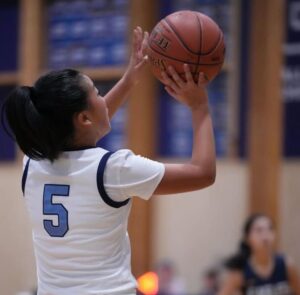
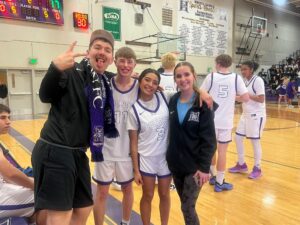
teamWhen was the last time you went to a sporting event where over 200 students came out to cheer on both teams? When was the last time you saw athletes who didn’t care about the score but were just grateful for the opportunity to play? When was the last time you saw an educator with 30 years of experience say that it was the best event they had ever witnessed? At Hermiston High School, we all saw this come to life this winter when we started our Unified Basketball team.
Unified Basketball is part of Special Olympics and works to create an inclusive opportunity for students with intellectual and physical disabilities. The focus of Unified Basketball is to have a fun and rewarding experience, while providing students an opportunity to participate in a high school sport. The teams are formed of three differently-abled student athletes with two player helpers, which are subbed on and off the court at five minute intervals. There is a running clock, which provides non-stop action on the court.

After being inspired at our October LEAP meeting, I spoke with our school’s Athletic Director, Larry Usher, to see what opportunities there were to connect with others through sports. He knew I volunteered with our special needs students and told me that our school was beginning a Unified Basketball team and asked if I would like to help coach. I eagerly accepted. I immediately started recruiting athletes, both with and without disabilities. I encouraged our special needs students too, I also recruited our varsity athletes to volunteer as player helpers. After a month of practice, it was time for our first game. Emotions were running high, and we had no idea how our athletes would respond to hundreds of people yelling and cheering them on. Our ASB and school administration had been actively encouraging students to pack the student section, and teachers to pack the stands, even petitioning coaches to start practices after the game so that athletes could support our Unified team.

Fitted out with brand-new Nike uniforms, our Unified athletes lined up for introductions. With a roaring crowd, they ran through a tunnel of cheerleaders to the adoring students. The best part? Our crowd cheered just as hard for the other team, with athletes from each team beaming from ear to ear. The game was action-packed, with both teams feeding off the energy of the cheering crowd full of families, students, teachers, and community members. After a very close game, our Hermiston team lost by two points, but it didn’t seem to matter to anyone. Even though we had lost, every person in the audience walked out with a smile on their face and a full, happy heart. Our athletes were ecstatic and just wanted to have another game.

Unified Basketball season was one of the high points of my high school career. On game days, when our athletes walked through the halls wearing their brand-new Nike sweatsuits, every student sincerely wished them good luck. For away games, our team was able to ride on the decked-out Hermiston “Rooter Bus.” For our final game, our main gym was packed full of community members who had heard about the amazing experience of attending a Unified Basketball game. Before the game, each player was given fresh flowers courtesy of the Hermiston FFA. While holding the flowers, both teams went in front of the student section to take a picture, which is now displayed on the windows of the main office.

Everyone who was able to attend one of our games can tell you how incredible the experience was. Our 14 athletes can tell you how impactful it was in their lives. The best part? They all made new friends and got to experience the rush of taking the court like our other varsity teams experience. Our special education teachers can tell you about the positive impact this program had on performance in class. The entire coaching staff and I can tell you how rewarding it is to coach athletes who are so excited for the opportunity to play basketball. The only downside to having a Unified Basketball team is that no sporting experience will probably ever top it.

I implore each of you to develop a Unified Basketball team in your school or community and give these differently-abled athletes the opportunity to have a quintessential high school experience. You just might find that this life-changing experience affects school spirit, the community, and you every bit as much as it does the Unified athletes.

Balancing Life, Sports, and School: A Key to Success – By Abel Garcia, Royal HS (’26)

A. Garcia


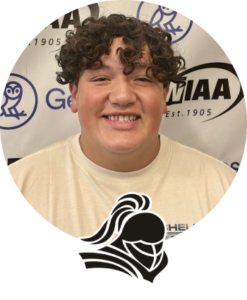
BALANCING LIFE, SPORTS, AND SCHOOL:  A KEY TO SUCCESS – BY ABEL GARCIA, ROYAL HS (’26)

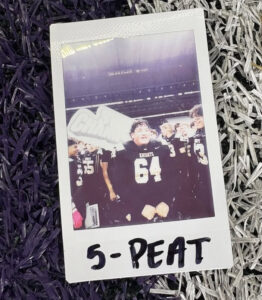
5PEATHigh school is an exciting time filled with new challenges, opportunities, and growth. For student-athletes, finding the right balance between sports, academics, and personal life can feel overwhelming at times, but it’s also essential for success. Getting that balance right not only helps students excel academically and athletically but also supports mental well-being and personal growth.

Student-athletes often have jam-packed days with early morning practices, after-school games, late-night homework, and constant juggling of commitments. While succeeding in both sports and school can feel rewarding, it can also lead to stress and burnout if balance isn’t maintained. This is where time management becomes key. Knowing how to manage your schedule effectively can help ensure schoolwork gets done on time, while still leaving room for rest, social time, and family moments.


The Power of Mental Breaks
In all the hustle, it’s easy to forget how important it is to take mental breaks. Just like your body needs rest after a tough workout, your mind needs time to relax too. Taking regular breaks throughout the day is essential for staying sharp, reducing stress, and keeping a healthy perspective. Whether it’s stepping outside for a few minutes, listening to your favorite music, or hanging out with friends, these breaks help you recharge, refresh, and come back ready to tackle your next task.


In addition to academics and sports, looking after your personal well-being is super important. Making time for self-care—like getting enough sleep, eating well, or simply relaxing—helps lower stress and prevents burnout. Plus, stepping away from sports and school once in a while can give you the mental reset you need to perform your best both in the classroom and on the field.


Being involved in sports teaches valuable lessons, such as discipline, teamwork, and resilience. But these lessons only work if they’re balanced with schoolwork and life outside of sports. Setting realistic goals, staying positive, and staying organized are all ways to manage both school and sports successfully. Plus, having support from teachers, coaches, and teammates is crucial. When athletes are encouraged to focus on their mental and emotional health, they’re more likely to succeed across the board.


At the end of the day, learning to balance life, sports, and school gives students an important life lesson: it’s not about being perfect in just one area, but about thriving in
multiple parts of life while still maintaining happiness and well-being. By finding that balance, student-athletes can reach their potential in both sports and academics—and set themselves up for success in the future, equipped with the skills they’ll need to handle the demands of adulthood.

This is he Team Tabs
Skip to content