wiaa

Importance of High School Sports for Teenagers


JoeyL_23


IMPORTANCE OF HIGH SCHOOL SPORTS FOR TEENAGERS – BY JOEY LURIE (’24)

High school sports are one of the most powerful opportunities for personal growth and community building. These sports and teams extend so far beyond just physical activity, but they play a crucial role in shaping the character and well-roundedness of teenagers.

Participating in high school sports teaches teens values such as discipline, teamwork, and resilience. The strict training schedules and competitive environments require commitment, which teaches teens the importance of dedication and perseverance. These skills are crucial both in sports and as life skills. 

Additionally, sports provide a unique scene for fostering community and teamwork. Being part of a team forces collaboration, communication, and support. These skills and experiences create not only lasting friendships but also allow for a sense of belonging and unity, which create an inclusive culture at school, which students can carry out for years.

High school sports also hugely contribute to physical and mental well-being. Regular and consistent exercise improves mood, reduces stress, and enhances cognitive function (all skills needed for high schoolers). For teenagers trying to navigate high school, the opportunity to participate in sports serves as a helpful outlet for stress relief and a tool to maintain a healthy lifestyle. 

In addition to individual benefits, high school sports have a wider impact on the school and community. They create school spirit, bringing together students, parents, and staff to support their teams. 

The importance of high school sports for teenagers extends so far beyond the physical aspect. These experiences shape character, build lasting friendships, promote physical and emotional well being, and create a sense of community. As schools continue to focus and prioritize holistic education, recognising and supporting high school sports becomes crucial to supporting the holistic development of the next generation.

IMG_0339

Eating Disorders in Athletes


Luka_23


EATING DISORDERS IN ATHLETES – BY LUKA KAWAHARA (’24)

I struggled with disordered eating habits my first two years of high school. Competing in both wrestling and track, I became aware of the importance of nutrition and how it affected my performance. This realization transformed into a hyperfixation on nutrition, leading to disordered eating and body dysmorphia that had detrimental effects to my health. I believe there needs to be more awareness behind the topic of eating disorders in athletes as it is often overlooked by athletes, coaches, and parents. 

Many risk factors in high school/college athletics are present to the development of eating disorders, especially in sports that underscore endurance, physical appearance, or have weight requirements. Some of these risk factors can include anxiety from competing, the pressure to perform, self-esteem struggles, and a belief that a lower body weight leads to better performance. Studies conducted by the National Library of Medicine report that the prevalence in disordered eating among female athletes vary from 6-45%, and 0-19% in male athletes. Although research suggests that some groups are more susceptible to eating disorders than others, it is important to note that many student athletes fail to report or recognize disordered eating habits. Therefore, it is crucial to be aware that eating disorders can be present in all sports, impacting athletes of all ages and gender, at all body shapes and sizes. 

While athletes strive to achieve a certain body that is believed to enhance their athletic performance, doing so through disordered eating behaviors can have both short and long term negative effects. Some of these impacts include a lack of hormone production, loss in bone density, fatigue, electrolyte imbalances, and decreased motivation to compete. These negative effects highlight the need for more education and awareness around eating disorders in athletics. 

As a wrestler, I can understand the extent some athletes are willing to go through to win. Many sacrifices are made to win a championship, and cutting weight is one of them. Deciding how much to sacrifice is up to the athlete themselves.  While these sacrifices are often necessary, it is important to consider how it will affect performance, growth, and long term health.

I highly encourage student athletes struggling with or at risk of disordered eating to seek assistance from parents, coaches, or trusted adults. Education of these harmful eating behaviors and getting proper support should be more accessible to student athletes, including both physical and online resources. Finding a healthy balance between enjoyment and sacrifices is key to a successful athletic experience.

IMG_6963

Embracing Your Why


Mya_23


EMBRACING YOUR WHY – BY MYA MORALES, SUNNYSIDE (’25)

Many high schools embrace the concept of “School Spirit.” aspiring to create the ideal high school experience, the dream that everyone has thought of when growing up. They hold events and pep assemblies where students have the opportunity to express their enthusiasm with school spirit. However, when you attend a high school that has a deeper connection in a “Why” (why they are doing this), it’s a fulfilling discovery of purpose. The dedication to include everyone allows the motivation of “Spirit” to impact all those associated with the school in a more significant way that extends more profoundly to everyone.

My name is Mya Morales, and I am a junior at Sunnyside High School. During my early years, I found myself distant and in a closed circle. I experienced a sense of being lost, different, and limited despite my unique qualities. My journey took an unexpected turn at the age of 8 when my mom was diagnosed with ALS (Amyotrophic Lateral Sclerosis). Coping with such a reality check at a young age presented emotional challenges beyond my years. Despite my struggles, I faced the difficulty of navigating the real world while praying for a day when it would all come to an end. Eight years later, now, at the age of 16, I am incredibly grateful that my mom remains my best friend. Her unwavering support encourages me to step out of my comfort zone and embrace new opportunities, reflecting on my educational journey and the evolution of my identity as a student, athlete, daughter, sister, and person. I recognize the significant changes that have shaped me in different ways. While my story is ongoing, the beginning chapter has undoubtedly come to a close.

When I was in 7th grade, as the coronavirus pandemic began to spread, our class had the opportunity to run for ASB counsel for the upcoming school year. At the age of 12, the thought of running for a leadership role was intimidating and frightening. I had never taken on such an opportunity before, especially in a position of leadership. Initially, I considered the Vice President position and discussed it with my mom who encouraged me to go for it. Faced with this unfamiliar prospect, I took a leap of faith and instead ran for the position of President. Surprisingly, it turned out to be the best decision I had made, thanks to my mom who encouraged me to get out of my comfort zone and two other best friends who agreed to run for positions alongside me, providing invaluable support.

During my year as ASB president, I experienced an overwhelming amount of support from our school staff, students, and district — from organizing events, managing the student store, deciding on Spirit Week dress-up days, and handling morning announcements. My leadership skills developed rapidly as I gained confidence and honed public speaking qualities that were previously unfamiliar to me. As I made decisions for our student body, I realized that being ASB President was more than just a title; it was a significant responsibility. 

With numerous opportunities unfolding, I had the chance to observe what was happening at my high school. Witnessing events and hearing about their impact on students, staff, and the community made me feel a strong desire to be involved. I knew I wanted to contribute, make a difference, and have a positive impact on others within our school district and community. I later discovered that the spirit at Sunnyside High School is rooted in having a clear “Why,” comprised of three essential components. Firstly, there’s an emphasis on creating a culture where all students and staff feel connected to SHS, understanding their role in the well-being of the school and fostering a sense of self-worth. Secondly, the importance of building powerful relationships is stressed, creating a culture where everyone supports each other in achieving individual and group goals and fostering a sense of belonging. Finally, the culture highlights the significance of students and staff envisioning their future, ensuring a positive outlook and creating a sense of hopefulness for each individual.

Our “Why” at SHS may seem simple but impacts our school and community. So, as you look to make a change, I ask you to think clearly about what is your “Why”, and the importance of having a clear understanding on the principles of this work! Finding one’s “Why” can be a powerful motivator and guide in leadership and personal growth.

As I continue to grow over the years as a leader here at Sunnyside High School, I remind myself to reflect on my journey and recognize the significance of my experiences. The realizations I’ve had serve as an eye-opener, emphasizing the truly special essence of what we have here. Many others, like myself, have faced silent battles and found their place of belonging. Your battles are not entity, they shouldn’t be whispered or remain hidden. To the ones who feel trapped and locked away: find a light to your current life and continue to proceed and find your ‘WHY,’ and remember that reaching out for help is a sign of strength, not weakness. In all, I owe a thank-you to my school for instilling in me the courage to explore and pursue what I love. The support I’ve received within our school district has played an essential role in shaping who I am today with the many opportunities in leadership roles.

IMG_2121
IMG_2120
IMG_2155

The Impact of Club Sports on Young Athletes


Kara 2023


THE IMPACT OF CLUB SPORTS ON YOUNG ATHLETES – BY KARA MA, THE BUSH SCHOOL (’25)

Playing sports has always been a significant part of my identity and daily routine. Ever since I was five years old I have found myself drawn to the game of basketball. The speed, liveliness, and comradery that I feel while playing has always brought me an immense amount of joy. In fourth grade I joined my first club basketball team so I could challenge myself and practice even more. This was a big step from the recreational and school feeder teams I was previously playing for. Being on my first club team built my skills as an athlete and fueled my competitive energy. I have also met lifelong friends and mentors through playing club basketball. However, the immense amount of pressure and the mental toll my teammates and I have experienced playing club basketball leaves me wondering: Is it worth it to place young athletes, like myself, in club sports?

Club sports are big commitments because of travel tournaments, intense practices, and the abundance of expenses that come with it. There has been a growing expectation to place kids into competitive club sports at an even younger age in order to develop strong foundational skills. Looking back, my earliest memories consist of watching basketball with my family and running up and down a basketball court. I distinctly remember being in elementary school and going to trainings every day during summer break in hopes of improving my skills. Tirelessly working to perfect my jump shot in a humid gym was the highlight of my time off school. The hours I have spent playing basketball have taught me to persevere and the value in working hard, which are still some of the best lessons I have ever learned.

Some of my favorite memories have been going on travel tournaments with my teammates because I was able to build friendships, explore new places, and compete with teams from all over the country. Although I am forever grateful for these opportunities and the knowledge I have gained through playing club basketball, there are downsides to playing competitive sports at such a young age. There have been numerous times where I have felt scared to go to practice or play in games in fear of disappointing my coaches or teammates. I thought being anxious before every shot or drill was a normal experience. This was the result of the “tough love” style of coaching that has been instilled in me, which is pretty consistent and considered normal in the world of club sports. My time during the Covid-19 pandemic was incredibly transformative for my confidence by giving my overworked seventh grade self a break from my intense practice schedule. During this time away from basketball, I was able to remember that I play basketball because it is something I genuinely enjoy and my time on the court was not supposed to be filled with anxieties and panic. The stigma surrounding stress and burnout that club sports can produce is extremely problematic and needs to be addressed. This competitive culture in club sports can severely impact an athlete’s confidence and attitude towards playing a sport. Unfortunately, I have witnessed many people who love basketball and are incredible players burn out from the constant judgment and pressure from coaches and teammates. On the other hand, my experiences playing for various club basketball coaches have helped me become incredibly receptive to feedback and develop thicker skin. These are both qualities I take great pride in that have helped me thrive in both academic and athletic settings.

So, was it worthwhile to grow up playing in this hyper-critical sports setting? Basketball has developed my abilities as an athlete, overall tenacity, and character, all of which have helped prepare me for all of my high school academic and athletic endeavors. I have grown as a leader and become better at communicating with others because of playing on a club team. Without playing club basketball, I would not see myself as someone who flourishes in leadership roles or being a part of the WIAA LEAP committee. In full transparency, playing club basketball at such a young age could be demoralizing at times, but despite the mental and physical exhaustion I experienced, playing club basketball was incredibly beneficial in the long run. In short, I wouldn’t change it for the world. I am so glad that I have been able to play basketball at a high level with some of my best friends for several years, and now translate those experiences into my current club and high school teams.

kara ma 1
Kara Ma 2
Kara Ma 3

Why Sports?


Bryn_23


WHY SPORTS? – BY BRYN BECKMAN, RAINIER (’25)

A regular high school basketball game comprises four eight-minute quarters, with a typical season having twenty games. A regular football season consists of 10 games with four 12-minute quarters. A volleyball season is made up of 16 matches, all of which are determined by who wins the best out of five. Therefore, by the end of each regular season, basketball equates to almost 11 hours of actual playing time, football adds up to exactly eight, and depending on the skill comparison of each team, volleyball is typically even less. However, when it is all said and done, the season itself is nowhere in comparison. All of the late-night practices, early morning workouts, long bus rides, and locker room conversations equate to a much grander total. The competition itself is pale in comparison to the hours of dedication.

I have played basketball nearly my entire life, so much to the point where I don’t know what to do without it. I am the oldest of four, all of whom play basketball almost as much as I do. We have grown up in gyms, knowing how to dribble a ball before we could even tie our shoes or do our own hair. When I was eight years old, I started playing basketball at my local league. I had hour-long practices maybe twice a week, with an occasional game sprinkled in. I wore my “Yelm League” shirt with pride, beyond excited to be part of a team, especially one where I had the opportunity to beat up on boys. I eventually graduated from this “intense” competition and moved on to play on multiple different tournament teams; at this point, it started to click, and I realized that this sport could really be my “thing.” I began to put a lot more time in, spending my nights off to go to the gym with my dad. I would shoot through tears of frustration and stubbornness when hearing “reach into the cookie jar” for the thousandth time. I will say, sixteen years later I finally realized he was right. I continued to dedicate my time towards basketball, eventually playing year-round, rotating back and forth between my school and tournament teams. The more time I put into basketball, the more I saw my efforts coming to fruition. I have earned the opportunity to play at state for two of the three years of my high school career thus far, and I have also been selected to play on a traveling AAU team called Hoopstars. I wouldn’t be where I am today without dedicating hours and hours of my time. The majority of my basketball career has been spent getting shots up on my own, lifting six days a week, running games with my teammates, and doing everything in my power to either recover from an injury or prevent one. All of this time and dedication was originally made for the purpose of playing in games; however, in reality, it is only a very small sliver of my entire basketball career. Now that I am potentially in the midst of the most important year of my life yet, my junior year, I can’t help but question: is it worth it? Is there really a reason behind all of this madness?

As athletes, our primary motivation is to win. We want to make the deciding free throw, score the final touchdown, hit the game-winning home run, and earn the coveted championship trophy. However, it’s never just that easy, and it certainly does not happen consistently. So how do we get to that point? We fail. We fail over and over again, but more importantly, we learn. We learn how to be better teammates, how to push ourselves past our perceived breaking point, and how to continuously improve ourselves and those around us. Sports help define us and they teach us lessons that take other individuals a lifetime to learn. Playing a sport is never consistent; every day is full of ups and downs, but we are forced to learn how to deal with them. Sports serve as a crucible, molding us into better individuals every day. The court, the playing field, the weight room, and everywhere in between is a classroom, teaching us profound life lessons that extend beyond the realm of athletics. By participating in a sport, we are guaranteed to have an indelible mark left on our character. As athletes, we don’t merely win and lose; we learn and we continuously improve.

Beyond the swift decisions and remarkable plays, sports forge enduring bonds that exist for a lifetime. The profound trust required to leave the deciding moment of a game in the hands of a coach or a teammate goes beyond mere teamwork; it’s a testament to the deep connection created through every leading moment. As athletes, we are compelled to relinquish a part of ourselves and dedicate it to the collective cause of the team. Those moments where everyone operates on the same wavelength — executing a flawless pass, having impeccable timing, moving as a unified unit, or celebrating in unison — epitomize the unique synergy found only in sports. The beauty lies where everyone collaborates persistently toward a shared goal. Having played alongside girls all over Washington, I often enter a gym already sharing a connection with someone on the opposing team. It is an incredible experience to have a friendship with someone who is intended to be the opposition, because regardless of the final score, that friendship will forever endure. As athletes, we become part of something greater than ourselves — a family capable of celebrating victories and enduring losses together. Sports are more than just the end result; they are shared moments and bonds unlike anything else. Through unwavering relationships, we thrive through adversity, not merely surviving but excelling through the toughest challenges.

The excitement of competition is an unparalleled experience — the stillness of the air during warm-ups, the anticipation building with each breath before the starting whistle, and the rush of adrenaline that propels us past our limits. This intoxicating blend of skill, strategy, and unbridled passion transforms an ordinary moment into an extraordinary one. What sets competition apart is its surreal moments — playing in an overtime game, defying the odds to win a match, or realizing every minute and drop of sweat served its purpose. These moments become unforgettable markers of the journey, enhancing the joy of competition and creating a narrative that resonates long after the final whistle echoes. Victory, in this context, is not just about defining moments in a game; it’s about relishing every second leading up to them. The journey itself amplifies the sweetness of triumph.

As the final buzzer echoes, the bonds formed, the lessons learned, and the memories created stand as a testament to the profound impact of sports. The journey, filled with dedication, camaraderie, and exhilaration, shapes not only characters, but it leaves an enduring legacy that transcends the playing field. In the chapters of high school sports, the conclusion marks not an end but a continuation of the narrative. The shared moments and bonds remain eternally imprinted on athletes’ hearts. So, to answer the question — yes. I wholeheartedly believe that playing sports is entirely worth it. Every second, every drop of blood, sweat, and tears, contributes to a journey that is undeniably worthwhile.


IMG_1024
IMG_1025

Young Female Athletes Deserve Female Coaches!


YOUNG FEMALE ATHLETES DESERVE FEMALE COACHES! – BY RYLEE ALOISIO, FRANKLIN PIERCE (’24)

Almost all male athletes have male coaches, so why don’t all female athletes have female coaches? I believe that young female athletes deserve female coaches because having a strong female role model and someone who believes in you means the world to a female athlete. Female coaches understand female athletes, while male coaches might not understand the mental and physical struggles that female athletes experience.

I grew up having male coaches, but then switched to Sundodgers. I have been in the Sundodgers organization for four years now, and it has changed my life immensely. I am not only a better softball player, but a better person, and I think this is because I have female coaches to look up to. In our organization, we focus on playing at the next level and we are coached by females who have been through the college process. This causes us players to have great role models and someone to help guide us through the recruiting process to hopefully achieve our goals of playing in college. 

I am lucky enough to be coached by Carli Rasmussen and Shawna Wright. Carli played soccer and softball at Pacific Lutheran University, and Shawna, who is the director of Sundodgers, played at The University of Washington and for Team USA. Having the both of them as mentors has made my softball experience amazing and I will forever be grateful for them. Carli and Shawna aren’t the only mentors I’ve had — Kennedy Robillard and the rest of the Softball University staff have also been through college athletics and are constantly pushing us to be the best we can be and helping us achieve our goals.

Former LEAP member Joh ’nell Clark told me that she met Carli and Shawna when she was thirteen, and at that time she didn’t really take softball seriously and was just having fun. Carli and Shawna showed her how to take the game seriously and also have fun, but she said that they didn’t only affect her softball-wise. She grew up wanting to be a strong, empowered woman like her coaches, and Carli and Shawna are what drove her to start coaching. Now, Joh ‘nell and her sister, Rhyme, coach the Sundodgers first 10U team! Female coaches inspire female athletes to also be coaches. In such a male-dominated position, it’s good to see more and more women step into that role.
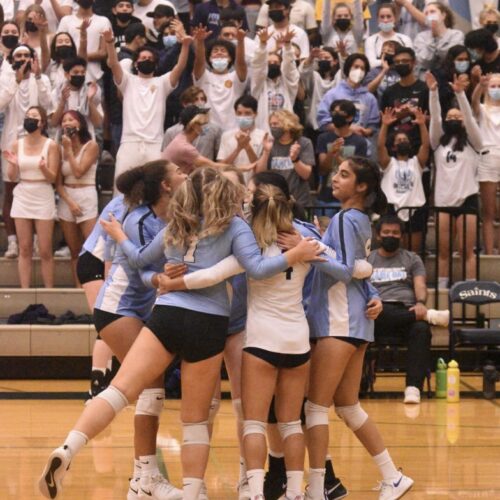
There are many talented male coaches, but I definitely feel like there are benefits to having female coaches who know the sport. I hope that one day I can coach and inspire female athletes to do so as well!

Aloisio 1
Aloisio 3

What If?


Madison_23


WHAT IF? – BY MADISON HULL, RENTON (’25)

What if you decided to join a sport on a random Monday? What if you decided to alter your life with one decision? What if you wanted to try something new for once?

When it comes to school sports, I will always be an advocate for joining one. Although there is a decrease in the involvement of teenagers in sports, there are so many benefits you are rewarded with. You never know what will happen when you decide to join…

Up until high school, I had gone to a small private school where I knew everyone in my grade. Going into a new school, which was about 10 times the size I was used to, I was considerably nervous. I wanted to go through high school as swiftly as possible, avoiding interactions with anyone and not wanting to branch out. I had decided that this was my fate before I even set foot in the building, and it took a toll on how much anxiety I was having.

Thankfully, even through my nervous emotions, I decided to join my school’s soccer team. Although I had played soccer for years before my freshman year of high school, I was not too keen on opening up to a new team. I had some rough times with previous teams and teammates that I had played with, meaning I was not ready to try another one. I built up a stereotype for what I thought I was going to experience solely because of what had happened in the past. Playing on more competitive teams outside of school was a completely different environment compared to what I was about to experience.

After the initial resistance, I went to my first practice, and to my surprise, I enjoyed being on a team with new people. I met girls from different backgrounds that I could never even imagine. I got an insight into how diverse Renton High School is and how everyone comes together to share similar traits and interests. Even though everyone knew each other and were previously friends, I felt welcomed not only to be social with the others but to play soccer. The pandemic took a toll on everyone, making it exciting to meet others and get back to the “norm” again. I am still grateful that I decided to come and meet those girls because they turned into some of my best friends to this day. Those same friends helped me come out of my shell and become the person I am: someone who is outgoing, expressive, and open to possibilities.

Because of the choice to join the soccer team, I was able to branch into other opportunities at school that I would have never joined if it were not for the people who helped me feel comfortable again. I joined my school’s student council and countless other clubs and activities, allowing me yet again to meet new people and observe student cultures.

Other things I learned from sports were competitiveness, teamwork, problem-solving, and leadership. This has led me to want to break the stigma behind joining new sports teams and make it a welcoming environment for all who want to play as well. Getting other peers involved in these same situations creates a better school atmosphere.

Still, three years later, my friends and I hang out, play soccer, and participate in school leadership. I was even shown other outside-of-school opportunities, helping further my growth as a person.

Whenever I am asked to write to a younger peer or my past self, I always suggest playing a sport. Not only was I able to stay active, I was able to make meaningful connections with others, which will stay with me, even out of high school. You can not answer “what if” unless you go out and see for yourself.

Madi Hull 3
Madi Hull 2

Why Does Inclusivity in Sports Matter?


WHY DOES INCLUSIVITY IN SPORTS MATTER? – BY ROCKY SRINIVASAN, EASTSIDE PREP (’24)

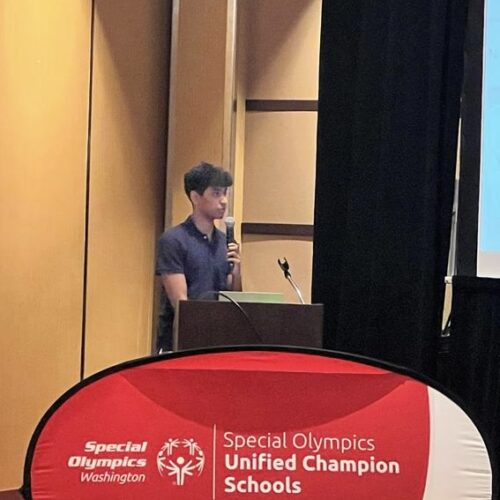
In this article, I would like to explore a topic that’s not only close to my heart but also a key focus of the Washington Interscholastic Activities Association (WIAA) – the crucial role of inclusivity in high school sports, with a special spotlight on adaptive sports. The WIAA commits to respecting all individuals and communities, providing a safe environment for positive and healthy activities, including providing equitable and diverse opportunities, strengthening character, instilling confidence, and maximizing potential through sportsmanship, leadership, and service. This article’s focus is on how this noble mission embraces adaptive sports, ensuring every student has the opportunity to thrive in high school sports. Let’s explore this vital aspect of inclusivity championed by the WIAA.

Why does inclusivity matter in sports? It not only matters but is necessary. It means ensuring everyone, regardless of their physical or mental abilities, has an opportunity to participate. It’s about creating an environment where differences are not just acknowledged but celebrated. Adaptive sports, tailored to athletes with disabilities, play a critical role in this. Adaptive sports modify traditional sports to meet the needs of all athletes, with physical or mental disabilities. These modifications level the playing field, allowing athletes with disabilities to compete and excel in sports they love. From wheelchair basketball to sitting volleyball, adaptive sports are as diverse as the athletes who play them.

Inclusivity through adaptive sports breaks down barriers. It challenges stereotypes about what athletes with disabilities can achieve and promotes understanding and empathy among all students. When schools embrace adaptive sports, they’re not just fostering athletic talent; they’re cultivating a culture of inclusivity and respect. Today, organizations like Seattle Adaptive Sports and Special Olympics are working to make adaptive sports accessible for all. And beyond this, participating in sports has physical and psychological benefits for all students. It boosts self-esteem, fosters teamwork, and improves overall health. Along with this, the impact of inclusive sports programs goes beyond individual benefits. They’re a powerful tool for social change, promoting equality and acceptance in the broader community.

For true inclusivity, adaptive sports shouldn’t be an afterthought but a key component of high school sports programs. Schools need to actively promote these opportunities and ensure they’re accessible to all students. Let’s champion a world where every high school athlete, regardless of ability, gets their chance to shine. Inclusivity in sports isn’t just about playing the game; it’s about changing the game for everyone.

Rocky 2
Rocky

Middle-Blocking Barriers

Alex B.


MIDDLE BLOCKING BARRIERS – BY ALEX BESTEMAN, INTERLAKE (’24)

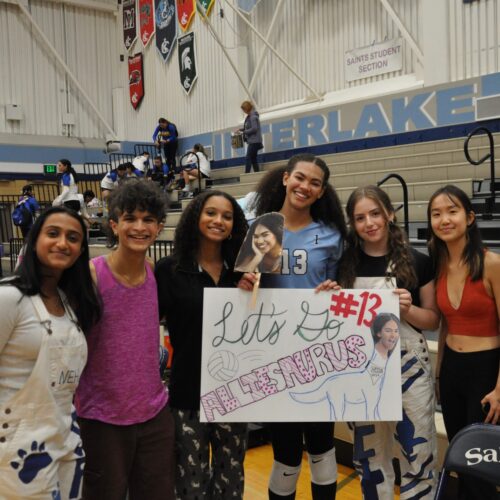
Entering my first year of high school, I was confident I wanted to play volleyball—not only did I love the sport, but before my arrival I caught word of a rumor that “Interlake volleyball is getting a 6’2 freshman!” While I am not actually 6’2 (5’11, close enough) I felt I had to fulfill expectations to the best of my ability. What I encountered during this season was an incredible group of girls working together to play highly competitive volleyball. Though I look back on that experience very fondly, with an abbreviated season from our hybrid, post-pandemic schedule, and no real semblance of the school’s dynamic or culture, my understanding of what the future would hold at that time was greatly obstructed.

My first official experience of high school was my sophomore year, 2021, now with in-person learning. My nerves from the thought of having to build an entirely new social circle dulled quickly as the Fall volleyball
season began. There was an immediate bond throughout the team—even more significantly here than from the season prior. Despite our variety of backgrounds, differences in class, or even preexisting friendships, there seemed to be an overarching consensus that forming a connection with every person on the team was a priority. We attributed a ton of our success to this chemistry, pushing us through stressful five-set matches and dawn-till-dusk tournament days.

After finishing our last games at State, the season came to a close. As the glamor from the preceding months faded into a memory and my day-to-day lifestyle calmed, it did not take long for me to see the reality of my school.

Interlake is unique. For those who aren’t familiar, the International Baccalaureate (IB) program is a rigorous academic curriculum where students are required to learn and test in a broad scope of subjects, earning a diploma if they pass. Traditional IB is completed through the student’s junior and senior year, but with Accelerated IB, students can earn the diploma early by starting the program their sophomore and finishing their junior year. Interlake offers a trifecta—General Education, Traditional IB, and Accelerated IB. While this variety of educational pathways offers many opportunities, it has also produced a clear element of disunion. This problem is exacerbated by the reinforcement of these divisions: there is minimal overlap between General Education and IB, and even Traditional and Accelerated IB hardly intersect, despite involving the same classes in many cases. Distinctions structurally led to distinctions socially, and now stereotypes and stigmas run rampant between the different cohorts of Interlake.

Being in Accelerated IB, playing a high school sport has been one of the only consistent opportunities for me to branch out beyond the people in my particular curriculum. I have been able to form amazing relationships with people on separate paths, sustaining and cherishing them throughout my four years. And I am not alone in this experience—I have witnessed friends and peers connect with people from all different grades and groupings, starting solely from the court or the field. At Interlake, I’ve found there is more power in playing a sport beyond just staying active and engaging in competition—it has become a vessel for mending divisions and expanding empathy across differences.

I am so grateful for Interlake. I’ve been able to meet incredible people, gain supportive mentors, challenge myself academically, and grow immensely as a person; I have experienced these things to such a degree that I don’t believe I could have anywhere else. But there are changes to be made, and we are changemakers.

One of the many reasons I love being a part of WIAA LEAP is because we get to actively address systems and give voice to making changes. And one of the many reasons I love Interlake is it has shown me that while we wait for systems to change, I have a clear and powerful action step. It is my individual responsibility to find ways to reach across barriers—to be a bridge builder. We can all do this through sports, clubs, activities, and interest. Building community is exciting, challenging, and there for the willing. Because the great news is you don’t actually have to be 6’2 to get in the game.

image1 (4)
This is he Team Tabs
Skip to content